Children May Need More Than a Regular Eye Exam

Children May Need More Than a Regular Eye Exam

By Dr. Kelly Cohen, OD, FOVDR, FAAO

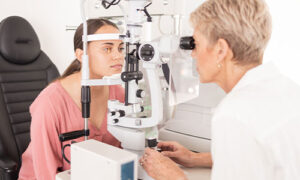
Ironically, many vision problems are hard to see and what you do not see can have a significant impact on your child’s ability to meet their potential. Most eye examinations are focused only on answering two questions. Do you or your child need glasses/contact lenses to see clearly and are the eyes healthy? Understanding vision starts with the definition.

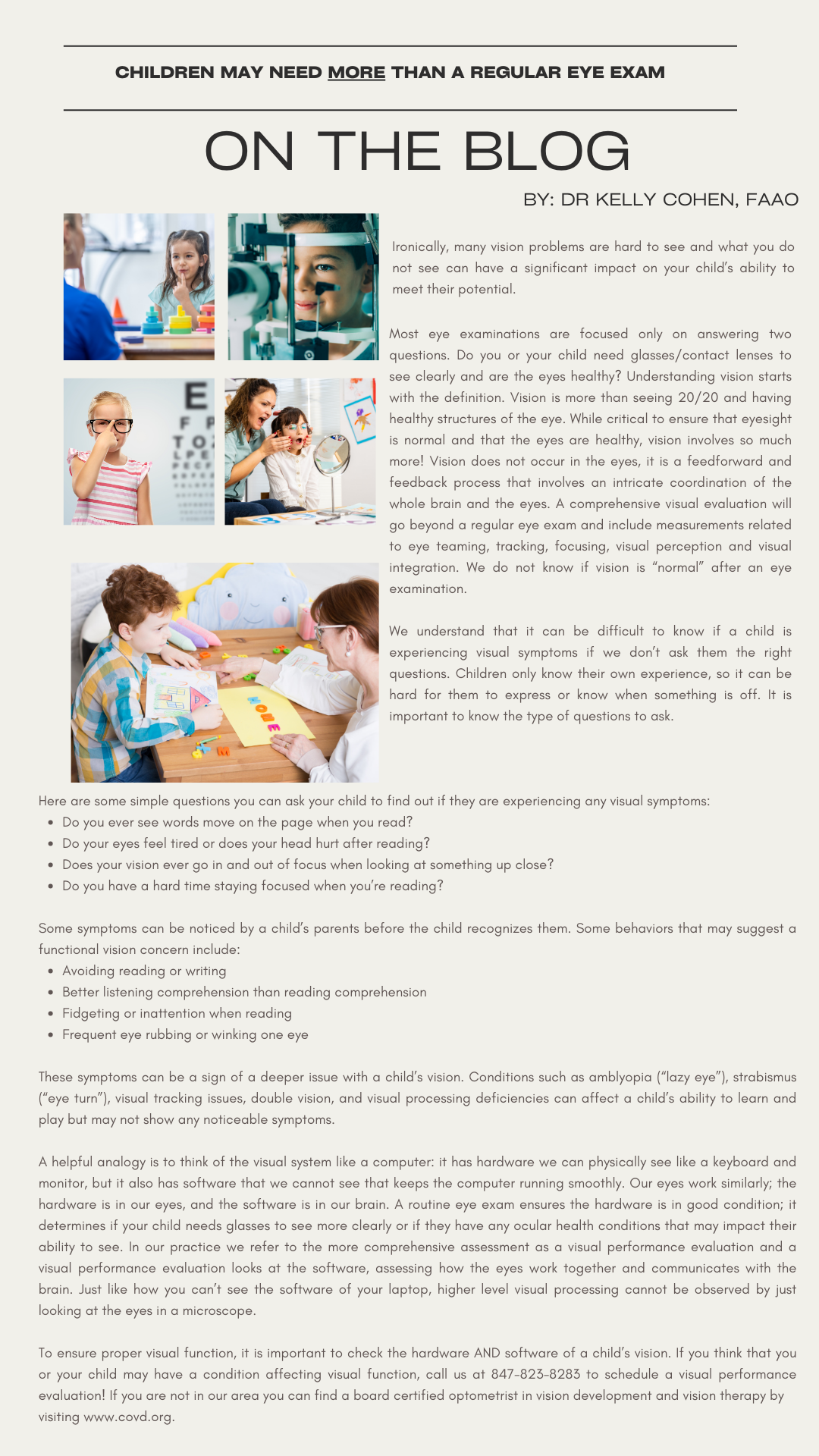
Vision is more than seeing 20/20 and having healthy structures of the eye. While critical to ensure that eyesight is normal and that the eyes are healthy, vision involves so much more! Vision does not occur in the eyes, it is a feedforward and feedback process that involves an intricate coordination of the whole brain and the eyes. A comprehensive visual evaluation will go beyond a regular eye exam and include measurements related to eye teaming, tracking, focusing, visual perception and visual integration. We do not know if vision is “normal” after an eye examination. We understand that it can be difficult to know if a child is experiencing visual symptoms if we don’t ask them the right questions.

Children only know their own experience, so it can be hard for them to express or know when something is off. It is important to know the type of questions to ask. Here are some simple questions you can ask your child to find out if they are experiencing any visual symptoms: 

  • Do you ever see words move on the page when you read? 
  • Do your eyes feel tired or does your head hurt after reading? 
  • Does your vision ever go in and out of focus when looking at something up close? 
  • Do you have a hard time staying focused when you’re reading? 


Some symptoms can be noticed by a child’s parents before the child recognizes them. Some behaviors that may suggest a functional vision concern include:

  • Avoiding reading or writing
  • Better listening comprehension than reading comprehension
  • Fidgeting or inattention when reading
  • Frequent eye rubbing or winking one eye


These symptoms can be a sign of a deeper issue with a child’s vision. Conditions such as amblyopia (“lazy eye”), strabismus (“eye turn”), visual tracking issues, double vision, and visual processing deficiencies can affect a child’s ability to learn and play but may not show any noticeable symptoms. 

A helpful analogy is to think of the visual system like a computer: it has hardware we can physically see like a keyboard and monitor, but it also has software that we cannot see that keeps the computer running smoothly. Our eyes work similarly; the hardware is in our eyes, and the software is in our brain. A routine eye exam ensures the hardware is in good condition; it determines if your child needs glasses to see more clearly or if they have any ocular health conditions that may impact their ability to see. In our practice we refer to the more comprehensive assessment as a visual performance evaluation and a visual performance evaluation looks at the software, assessing how the eyes work together and communicates with the brain. Just like how you can’t see the software of your laptop, higher level visual processing cannot be observed by just looking at the eyes in a microscope.

To ensure proper visual function, it is important to check the hardware AND software of a child’s vision. If you think that you or your child may have a condition affecting visual function, call us at 847-823-8283 to schedule a visual performance evaluation! If you are not in our area you can find a board certified optometrist in vision development and vision therapy by visiting www.ovdra.org.

Children May Need More Than a Regular Eye Exam

Recent Posts